
We spend so much of our energy trying to work smarter, move faster, and cram more into each day. Everywhere we look—social media, podcasts, self-help books—we’re told how to maximize every minute.
But rarely do we hear anyone teach us how to pause, to actually stop, breathe, and let our minds and bodies rest.
Some days, I feel like I’m spinning plates that never stop. I’m a mom of three energetic boys, a wife, and a homemaker, and now I’ve added rental business operator to the list.
I know how to work hard, but I am learning that without real rest, even the most productive days can leave me empty. If you’ve ever felt the same—tired, stretched, and craving a slower rhythm—you are not alone.
Yet, amid the noise of constant productivity, God whispers a different rhythm—“Be still.”
Struggling to slow down? Here’s how the Sabbath, both biblically and scientifically, reveals our deep need for real rest and renewal.
The Biblical Foundation of Sabbath Rest
But lately, something in me has been whispering: This isn’t sustainable Something has to change. I realized I didn’t just need a break. I needed God’s rhythm, not my own.
The answer wasn’t in a productivity hack or a better system. It was in Scripture.

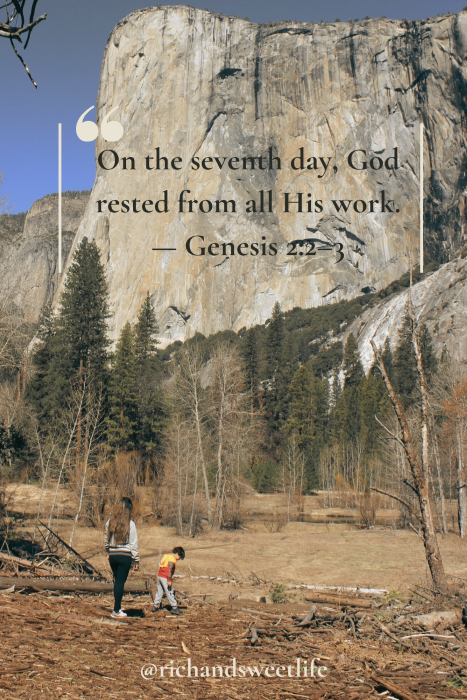
From the very beginning, God modeled rest.
He wasn’t tired. He was showing us the rhythm of trust. In Exodus 20 and Deutronomy 5, God links the Sabbath to freedom: “Remember that you were slaves in Egypt…” Rest became a declaration that His people were no longer bound by busyness or fear of lack.
And that is the powerful message at the heart of Sabbath:
Rest isn’t laziness—it’s trust.
When we stop striving, we’re saying, “God is my provider, not my productivity”. The Sabbath reminds us that our worth isn’t in what we do, but in who we belong to.
And while Sabbath rest is deeply spiritual, it’s also beautifully practical. God designed our bodies and minds to follow this same rhythm of work and renewal.
Read More: Caring for the Temple

The Science of Rest and Recovery
I used to think rest was a luxury. Something I’d get to “someday” when life finally slowed down. But the more I pay attention, the more I realize rest is not extra. It is essential.
And it is not just a feeling or a spiritual idea. It is a design woven into us from the very beginning.
Science is now confirming what Scripture has said all along. Real, intentional rest leads to deeper creativity, better health, stronger relationships, and a more grounded life.
When we rest, our brains reset, our bodies recover, and our nervous system finally gets a chance to breathe.
Let’s take a look at what happens in the brain when we rest:
- Your Brain on Rest: Creativity, Clarity, and Memory
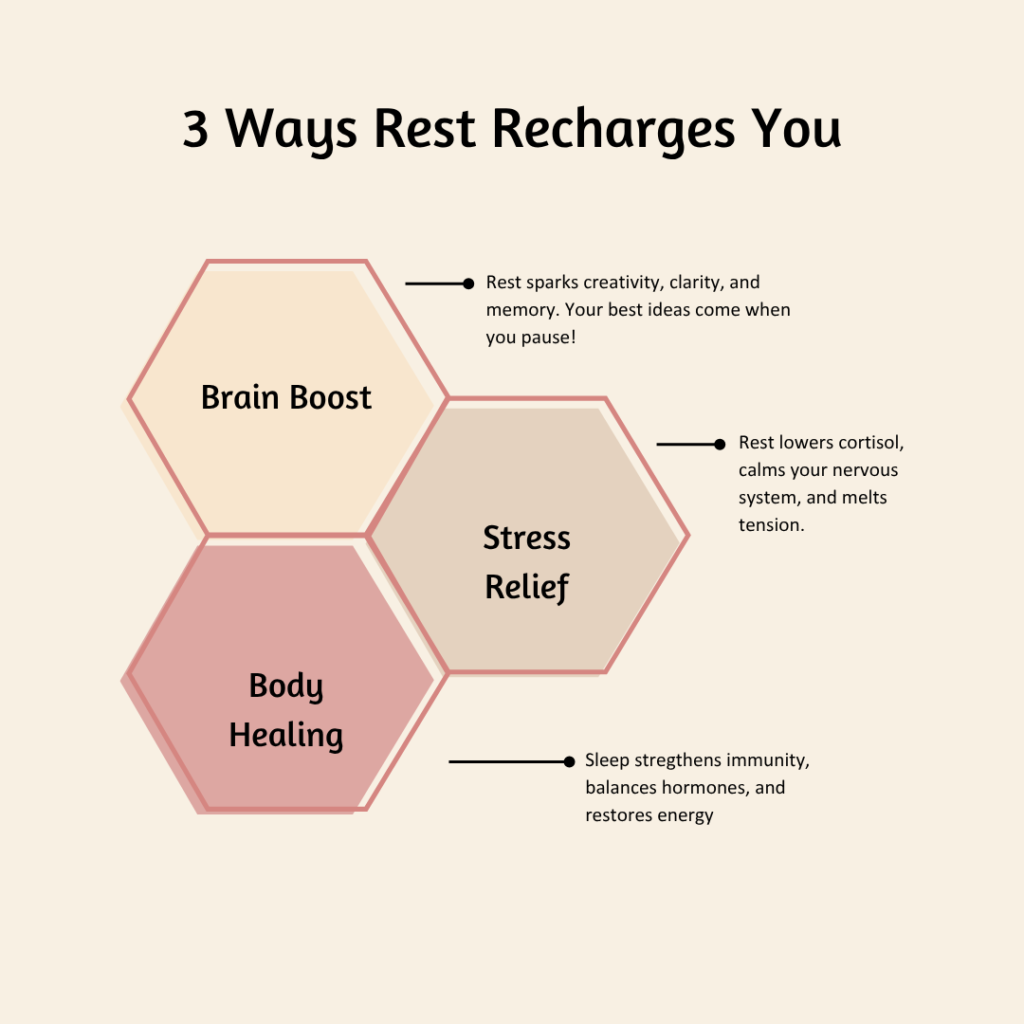
When you daydream, sit in silence, or pause from constant input, your brain activates what scientists call the DMN or Default Mode Network. This is the part of your brain responsible for creativity, problem-solving, and big-picture thinking.
That means your best ideas don’t usually come when you’re grinding. They come when you’re resting.
It is why clarity hits in the shower, on a walk, or during a low morning. Rest doesn’t waste time; it sharpens the mind. - Cortisol and the Nervous System: Why You Feel So Tired
When life is go-go-go, your body releases cortisol, the stress hormone that keeps you alert and “on.” Short bursts are normal, but constant stress keeps the nervous system in a fight-or-flight state.
That’s when you start feeling anxious, irritable, foggy, or exhausted even after a full night’s sleep. Rest signals your nervous system to stand down, lowering cortisol and allowing your body to repair the damage that hustle has been causing. - Deep Rest and Sleep: How the Body Heals
Sleep is the body’s built-in doctor. During deep rest, your immune system strengthens, hormones rebalance, inflammation decreases, and your brain processes emotions from the day.
Without quality of rest, you can work hard and still feel broken on the inside because your body has not given the chance to heal, reset, and release what it’s holding.
Read More: How Movement and Rest Heal the Body and Mind Naturally
Practical Rhythms of Rest
Rest doesn’t have to be dramatic, time-consuming, or perfectly planned. It grows through small intentional rhythms. The kind that quietly shapes your days, steadies your mind, and brings your nervous system back into peace.
Here are a few simple practices to help you build a life that breathes again:
- Create Micro-Pauses in Your Day
You were not designed to run in one ling stretch. Every few hours, step away. Even for 2-5 minutes. Step outside. Sip water slowly. Breathe. Let silence meet you before the next task.
Small rests throughout the day prevent big breakdowns later. - Protect your “Yes” and Honor Your “no.”
Overwhelm often comes from overcommitting. Before saying yes, ask, “Will this cost my peace?” If it will, gently decline.
Protecting your energy is not selfish. It is stewardship. You are allowed to guard what God has given you. - Unplug with Intention
Choose a window each day where screens are off. No scrolling, no noise, no notifications tugging at your brain. Give your mind a break from consuming, so it can return to creating, imagining, and simply being. - Build a Weekly Sabbath Rhythm
Choose one day (or even a half-day) to slow everything down.
Let it be restorative, not productive. Light a candle. Go for a slow walk. Worship. Nap. Be with your family. Let the day remind your soul:you are held, even when you are not hustling. - End your evenings with peace.
Create a simple wind-down ritual. Dim lights, stretch, journal, pray, or read. Teach your body that nighttime is not for catching up. It is for letting go.
Rest is not an escape from your life. It allows you to show up for it. When you choose intentional rhythms, you don’t just get more sleep, you get more patience, more presence, more joy, more you.
You were never meant to run on empty. You were made to live from a rested place.
Read More: The Ultimate Guide to Self-Care
Bringing it all together
You don’t have to earn rest, justify it, or wait for everything to be done. God designed you for rhythms of renewal, in your body, your mind, and your spirit. When you pause, breathe, worship, laugh, and delight in the life He’s given you, you’re not falling behind. You’re living in His design.
Rest will not make your life smaller.
It will make your life fuller.
This week, choose one small rhythm: a micro-pause, a sabbath moment, a device-free hour, a slow family walk. And let God meet you there. Little by little, rest becomes a lifestyle, not a luxury.
You soul is worth slowing down for.