
In a world that moves quickly and asks a lot of us, calm doesn’t always come naturally. I’ve learned that peace isn’t something we wait for. It’s something we gently practice. Over time, faith-based daily habits have become anchors for my mind and heart, especially during full or emotionally heavy seasons.
These practices aren’t about perfection or rigid routines. They’re small, intentional moments that invite God into the ordinary rhythms of the day. When practiced consistently, they help regulate emotions, quiet anxious thoughts, and restore a sense of inner steadiness.
Below are simple faith-based daily habits that support calm, emotional balance, and a grounded heart.
1. Beginning the Day with Prayerful Stillness
Before reaching for my phone or stepping into the day’s demands, I try to begin with a few moments of quiet prayer. This can be as simple as sitting in silence, taking a deep breath, and inviting God into the day ahead.
Prayerful stillness helps shift the nervous system out of urgency and into presence. It reminds the heart that we are not carrying the day alone.
Research shows that right after waking, the brain passes through a calm, receptive state before fully shifting into focused thinking. Using this brief window for quiet prayer or slow breathing can help regulate the nervous system and set a more peaceful emotional tone for the rest of the day.
Gentle practice: Sit quietly for one minute and say a short prayer of surrender, such as, “Lord, guide my thoughts and steps today.”
READ MORE: 5 Gentle Habits that Supports a Calm and Healthy Life

2. Anchoring the Mind with scripture
Reading a short passage of Scripture—sometimes just one verse—can reframe the way we think and respond. While God’s Word offers truth and reassurance when emotions feel overwhelming, neuroscience helps us understand how reading calm, meaningful words can soothe the brain’s stress response and support emotional regulation.
When Scripture is read slowly and with intention, it can shift attention away from emotional overload, strengthen a sense of safety and meaning, and support a calmer, more grounded response throughout the day.
READ MORE: Caring for the Temple
Rather than reading for volume, focus on reflection. Letting one verse settle in the heart often brings more peace than rushing through several chapters.
Gentle practice: Choose one verse in the morning and return to it throughout the day when stress rises.

3. Practicing Gratitude as an Act of Faith
Gratitude is more than positive thinking—it’s an expression of trust. Noticing small blessings throughout the day helps soften anxious thoughts and brings awareness back to God’s provision.
Neuroscience and psychology show that gratitude can retrain the brain to notice positive experiences.
Even on difficult days, gratitude gently shifts focus from what feels lacking to what is still held and supported.
How to Practice Gratitude Effectively
- Journaling: Write 3–5 things you’re grateful for each day.
- Prayer or reflection: Thank God for specific blessings or experiences.
- Verbal acknowledgment: Tell someone you appreciate them.
- Mindful moments: Notice small things—the warmth of sunlight, a kind gesture, or a cup of tea.
Key: It’s less about the volume (“I’m grateful for everything”) and more about focused, heartfelt attention to each thing you notice.
4. Creating Pauses for Breath and Prayer
Faith-based calm often comes through intentional pauses. Taking a few slow breaths while whispering a short prayer can reset the mind and body during busy moments.
These pauses act as reminders that peace is available even in the middle of responsibilities.
Pausing for breath and prayer rewires the nervous system, grounds the mind, and opens the heart to clarity and spiritual connection.
Small intention pauses can have a big impact on your emotional connection, mental, and spiritual well-being.
Practical Ways to Implement Pauses
- Morning: Pause for one deep breath and a short prayer before checking your phone or starting the day.
- During the day: Take a few breaths before responding to emails, a text, or a stressful situation.
- Evening: Pause, reflect, and pray about the day before bed to calm the mind and heart.
READ MORE: 7 Healthy Ways to Honor Your Body and Spirit
5. Caring for the Body as a Sacred Responsibility
Caring for physical health—through nourishment, rest, and gentle movement—is also a spiritual practice. The body and mind are deeply connected, and tending to the body supports emotional regulation.
Honoring the body as something entrusted to us encourages a more compassionate and sustainable approach to wellness.
Practical Ways to Care for the Body as a Sacred Responsibility
- Mindful eating: Appreciate the nourishment in every meal.
- Gentle movement: Walk, stretch, or do yoga with intention, not punishment.
- Rest and sleep: Honor your body’s need to reset.
- Self-care rituals: Bathing, prayer, meditation, or simply listening to your body’s signals.

Caring for the body is not just about health or aesthetics; it is a sacred responsibility.
When we honor our physical selves, we align body, mind, and spirit, enhancing vitality, spiritual presence, and the ability to serve and live fully.
READ MORE: Rest in God
6. Ending the Day with Reflection and Release
Evening reflection allows the heart to settle before rest. Looking back on the day with honesty and grace helps release what no longer needs to be carried into tomorrow.
Release practices, like prayer, journaling, or deep breathing, activate the parasympathetic nervous system, lowering heart rate and cortisol and preparing the body for restorative sleep.
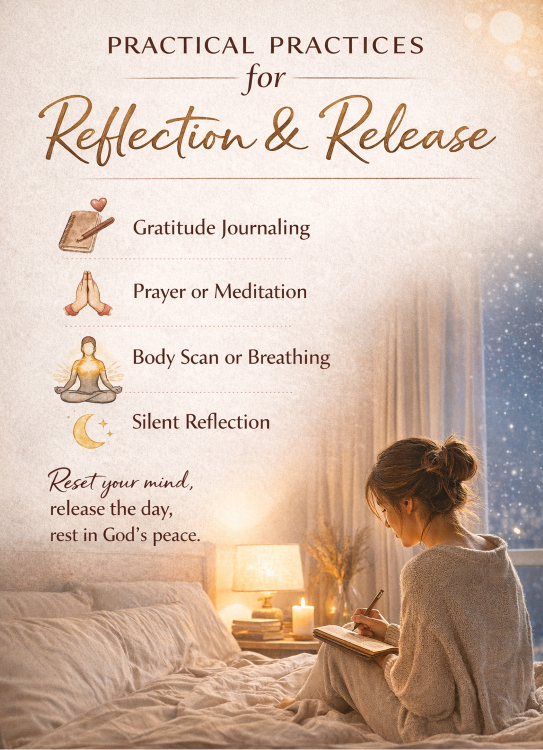
Practical Practices for Reflection and Release
- Gratitude journaling: Note 3 things you’re thankful for.
- Prayer or meditation: Release worries and invite guidance or peace.
- Body scan or breathing: Release tension from the body and mind.
- Silent reflection: Consider lessons learned or ways you grew today.
Ending the day with reflection and release allows the mind, body, and spirit to reset, restore, and realign, turning the close of one day into preparation for the blessings and clarity of the next.
READ MORE: How Movement and Rest Heal the Body and Mind

7. Trusting Progress Over Perfection
Faith-based habits are not about doing everything “right.” They are about showing up consistently with an open heart. Calm grows gradually through repetition, not pressure.
Neuroscience shows that reward circuits in the brain respond more to incremental progress than to “all-or-nothing” goals.
Recognizing growth, even small, strengthens dopamine pathways, boosting motivation and reinforcing positive habits.
Practical Ways to Embrace Progress
- Set small, achievable goals rather than aiming for complete perfection.
- Reflect on growth daily or weekly, noticing even tiny improvements.
- Practice self-compassion: remind yourself that God values your faithful effort.
- Celebrate milestones, no matter how small—they fuel momentum and hope.
Each small act of faith builds emotional resilience and deepens trust over time.

A Gentle Reminder
Calm is cultivated, not forced. Faith-based daily habits offer a steady way to support emotional balance while staying rooted in trust and grace. When practiced gently and consistently, they help calm the mind, soften the heart, and create space for peace to grow.
If you’re in a season that feels overwhelming, start small. One quiet prayer. One verse. One pause. These moments add up—and they matter.